What Does an Art Directorproduction De Signer Do? Explain Balance and Symmetry
Successful graphic designers know that mastering the visual concept of residue is the key to effective communication. When your designs achieve balance—which tin can happen with both symmetrical and asymmetrical designs—they'll reach greater harmony, and your audience volition use less energy taking in the information.
Agreement symmetry vs. asymmetry isn't hard, but getting it simply right can be tricky at first. That's why we're going to go through a few examples to ensure everything is crystal articulate.
What is visual balance? And what is symmetry?
—
Symmetry and balance are related. Only they're not quite the same thing. Take a look at their definitions:
Symmetry is the visual quality of repeating parts of an image across an axis, along a path or around a eye.
Asymmetry, on the other manus, refers to annihilation that isn't symmetrical.
Residuum is the visual principle of making a design appear equally weighted throughout the composition.
Balance measures the visual weight of your limerick, which impacts how much each element attracts your audience'south attention.
There are four bones ways to achieve residue:
Symmetrical residuum
Symmetrical balance occurs when your composition has the same visual weight on each side of an axis. Imagine perfect mirror images looking at each other around a central centrality.
This type of balance evokes gracefulness and simplicity. Information technology's pleasing to look at, just also very predictable.
Asymmetrical balance
A composition with unequal weight on both sides has asymmetrical balance.
More visually interesting than its symmetrical counterpart, this visual technique has a large focal indicate on 1 side with several, less meaning focal points on the other.
Radial balance
When visual elements radiate out of a mutual heart point, this is called radial residual. Imagine rays of sunlight emanating from the dominicus.
Mosaic residuum
Think of mosaic balance as organized anarchy that might look similar noise, but actually creates balance thank you to the absence of a distinct focal point.
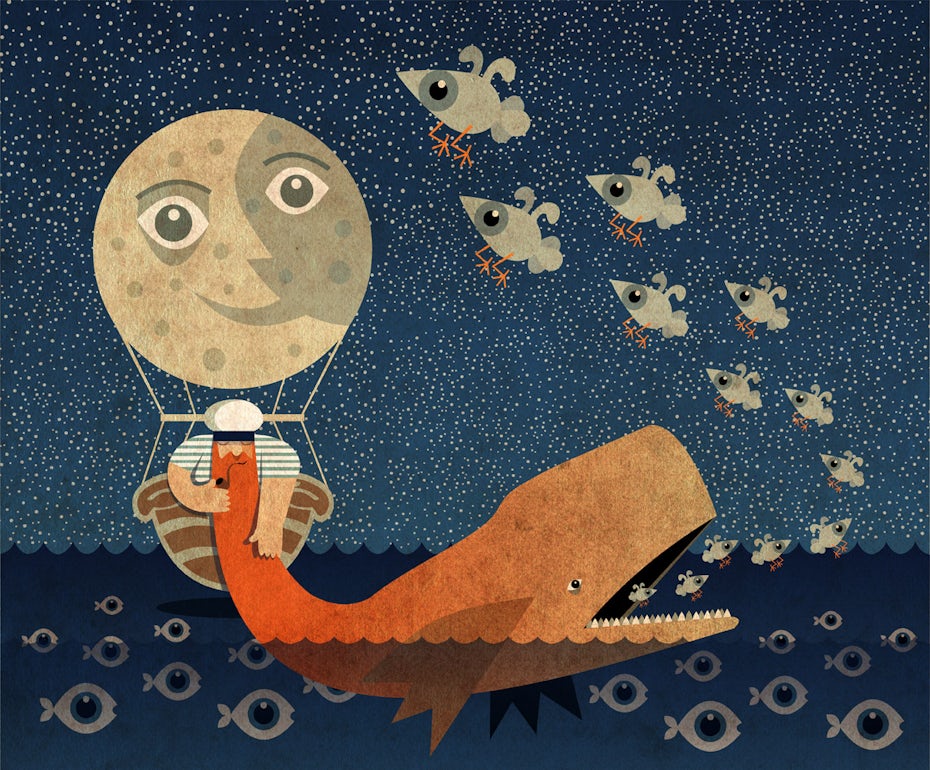
Each chemical element shares a common emphasis, and no single chemical element dominates the limerick.
The different types of symmetry and asymmetry
—
Balance is the key to peachy design, but symmetry is 1 of the tools you can utilise to become there. Here'southward a quick await at the four types of symmetry.
Reflectional symmetry
Imagine taking an apple and cut information technology in half. Both sides are mirror images across a center line, and this is reflectional symmetry.
Also known as bilateral symmetry, you'll find this technique used vertically, horizontally or diagonally.
Reflectional symmetry can exist perfect symmetry, meaning both sides of the image are identical. Even so, many instances—a face, for example—will feature subtle differences on each side.
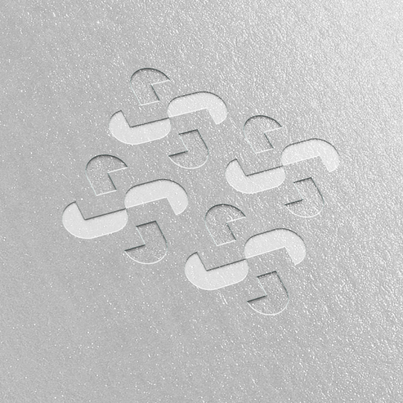
Translational symmetry
Think of the aforementioned shape repeating itself over and over over again.
This is translational symmetry—when visual elements repeat across a location in infinite. This repetition tin can happen for any length or in whatsoever direction.
Rotational symmetry
Imagine a automobile's moving wheels and spinning windmills, and you've got rotational symmetry.
Also known as radial symmetry, this technique features all visual elements rotating around a centre at any bending. This type of symmetry is ideal for capturing a sense of motion, dynamic action or speed.
Glide reflectional symmetry

We've all seen footsteps in the sand or snow. Think about how each footstep produces a reflection of the contrary foot, merely because of movement, each footprint doesn't line up with the other.
Glide reflectional symmetry is a play on reflectional symmetry, but information technology involves a shift in the position of each mirror image. Like rotational symmetry, it also conveys a sense of moving frontward.
Disproportion
If a limerick doesn't fit into the higher up categories, it'south probably asymmetrical.
As a designer, asymmetry both challenges and helps you. Balanced, symmetrical designs are typically more than engaging considering our eyes find them naturally more interesting and bonny.
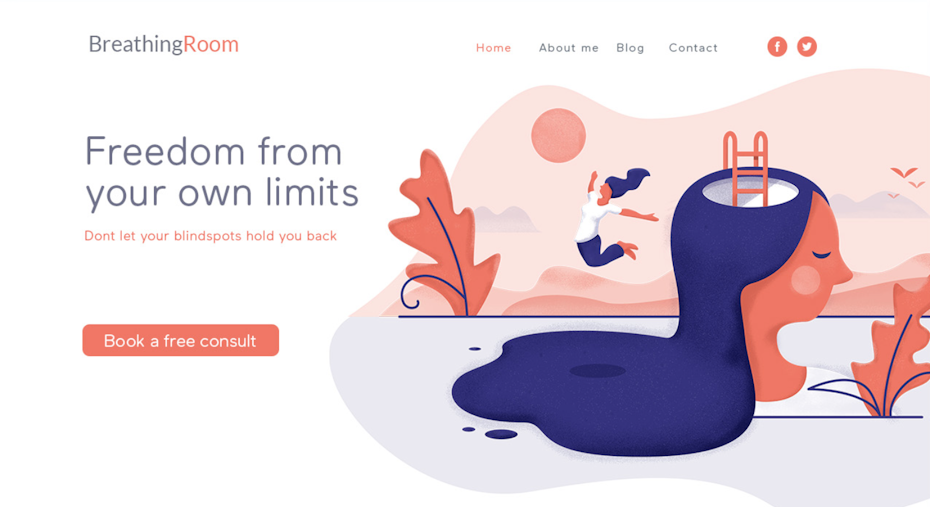
Yous have to work a little harder to achieve balance with asymmetrical visual elements, only y'all'll also have the liberty to experiment with unexpected patterns and forms, in a way you just can't with symmetry.
Examples of residue in graphic design
—
The best manner to larn about balance is to look at a few real world examples of symmetry and asymmetry in action.
Logos
Airbnb
The Airbnb logo is an example of pure reflectional symmetry.

If y'all draw a vertical line right downward the heart, both halves are perfectly the aforementioned. To create reflectional symmetry like this, use simple shapes and go for a minimalist logo that doesn't have many complicated parts to it.
Google's wordmark is an example of asymmetrical residual.

The first three messages are noticeably wider than the last three messages, creating a sense of greater visual weight in the kickoff half of the wordmark.
Spider web design
Apple
Apple's Mac webpage gives the states a stunning example of great reflectional symmetry.

Not only are the MacBook screens of equal length on both sides of the vertical, central axis, merely the lines of typography in the headline and subheading above are also equidistant on both sides of the centrality.
The Atlantic
This news magazine website features columns of different lengths and greater visual weight of images on its left side for an overall appearance that struggles to achieve residue.

Greater visual balance could exist accomplished by making the columns the same length and equally distributing the images on both sides of the vertical, central centrality.
Business cards
InClean
With its elementary design, the InClean concern carte du jour achieves perfect symmetry and balance.
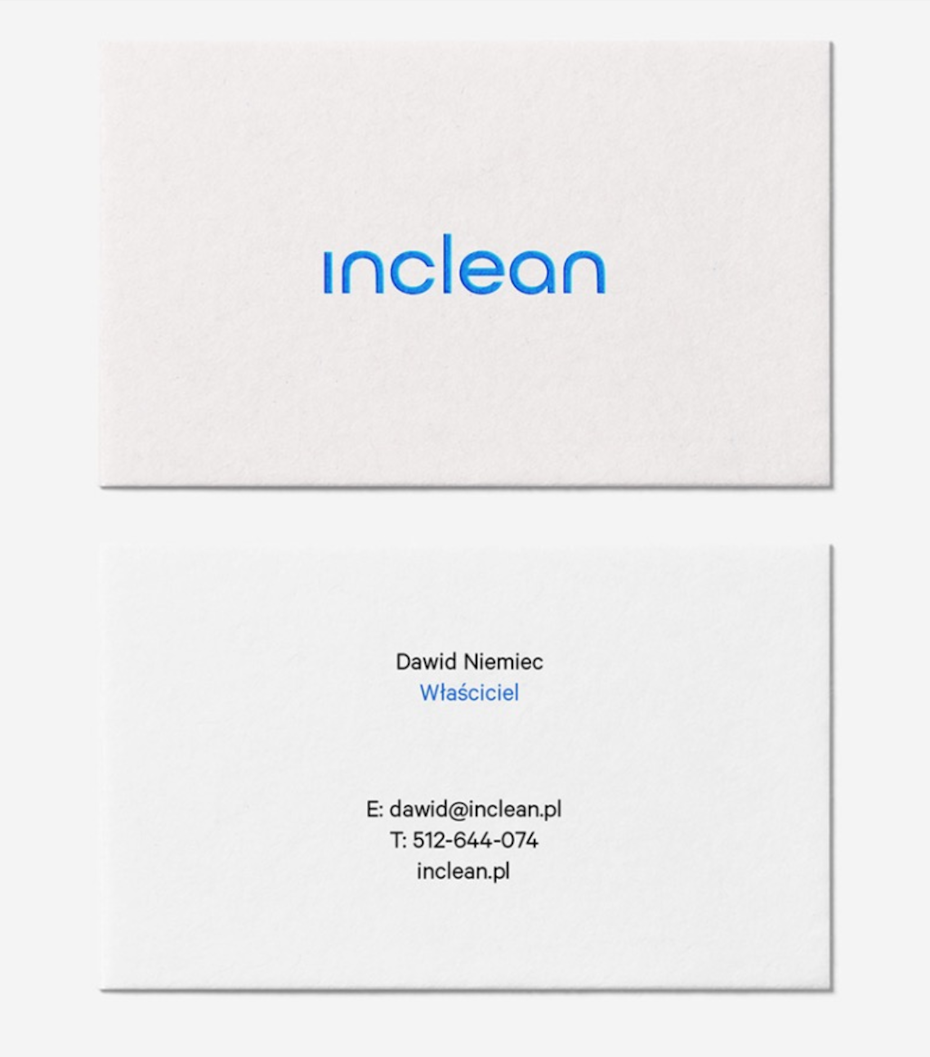 Perfectly centered copy with an abundance of white space proceed this minimalist composition balanced and trendy.
Hallo
This business concern carte du jour is ultra-minimalist with just the word "Hallo" printed on 1 side of it—a composition with clear asymmetry and intentional imbalance.

Some might find the big typeface too overpowering. Others might see that as the point of the pattern. A composition similar this sits on the line between balanced and imbalanced.
Understand balance to design better products
—
Knowing how to utilise symmetry and asymmetry properly is the primal to communicating your story through graphic pattern. Past harnessing the principle of expert remainder, you tin can turn ordinary designs into something spectacular and memorable.
Demand a perfectly balanced design?
Our designers can help y'all create just near anything.
This article was written by Marc Schenker with input from Sam Lundquist.
singletontiff1938.blogspot.com
Source: https://99designs.com/blog/tips/balance-symmetry-and-asymmetry/
0 Response to "What Does an Art Directorproduction De Signer Do? Explain Balance and Symmetry"
Post a Comment